
Perfection Through Imperfection
How to become authentic in the age of AI

The head of Instagram just shared a carousel of text of what he’s expecting in 2026. Below are the takeaways:
By 2026, “authenticity” will be infinitely reproducible: deepfakes and AI media will look real.
The internet already shifted power from institutions to individuals; creators gained trust as institutions declined.
AI will produce far more content than humans capture, including high-quality “synthetic” media that soon feels real.
As synthetic content floods feeds, true authenticity becomes scarce, increasing demand for trusted creators.
The success bar moves from “can you create?” to “can you make something only YOU could make?”
Because polish is cheap (AI + phone cameras), a raw, imperfect aesthetic becomes a credibility signal (“proof”).
People will shift from assuming media is real to default skepticism, focusing more on who posted and why.
Platforms will be pressured to label AI content, but detection will get harder… a better approach may be fingerprinting real media at capture (cryptographic signing).
Instagram should evolve with better creator tools, clearer AI labeling, real-media verification, richer account context/credibility signals, and stronger ranking for originality.
Basically this boils down to one word: authenticity. Do I agree with this assessment? I think I do.
But the question we must ask is, "What is authenticity?”
And how do you become an authentic person in the end of times?
Actually it’s really hard to tell what “being authentic” really means. Maybe I can speak my mind like a lunatic. Maybe I can run around a busy district naked. Maybe I can just “be myself”.
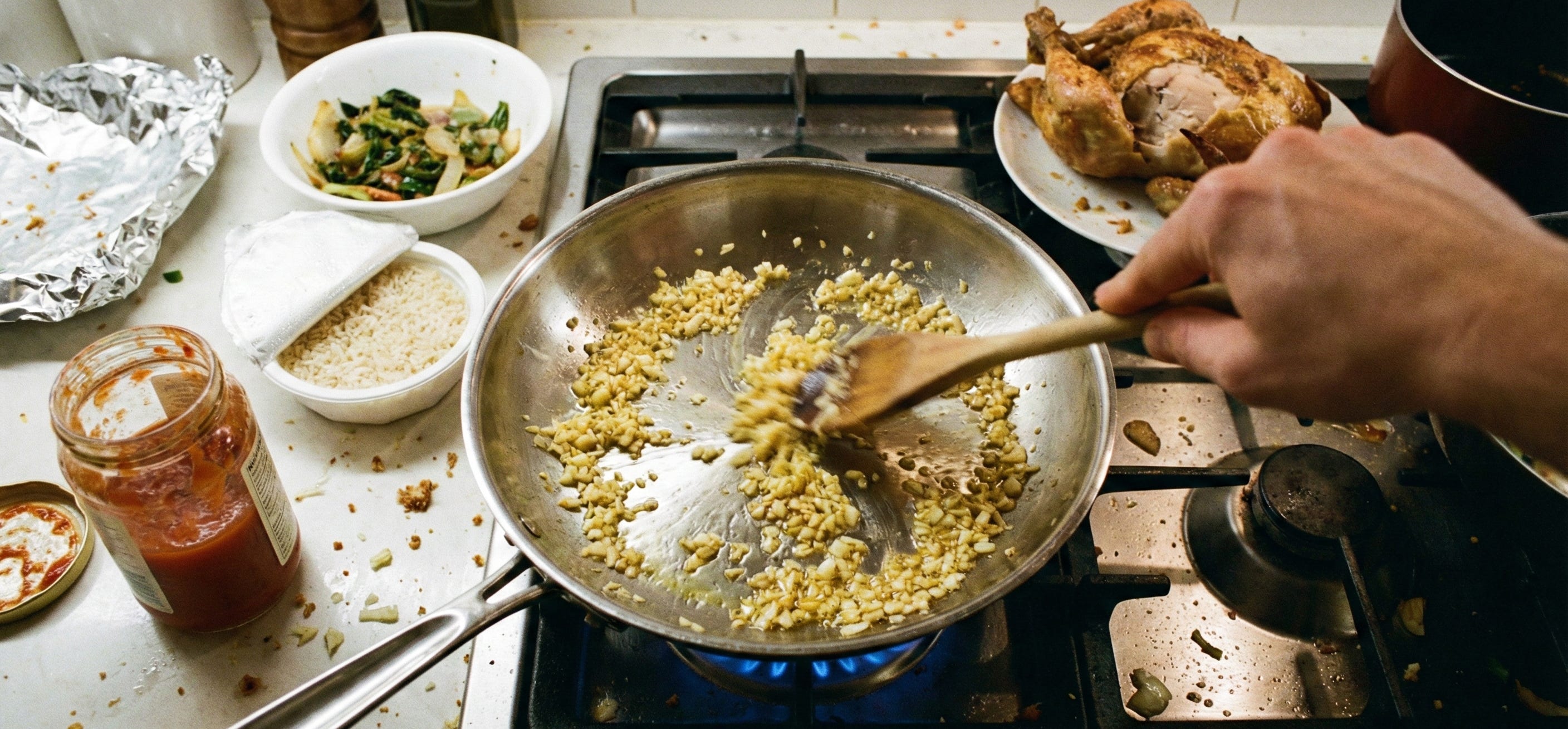
Or maybe we can guess what authenticity is through the odd hobby of making food alone to eat. We call it cooking. Nobody does it anymore.
When I started to learn how to cook, I had no clue. I started with stir fry noodles. I didn’t even know that woks were meant to be seasoned and had everything stick on the surface, pouring an unhealthy amount of soy sauce on my soon-to-be food because I couldn’t make it taste good.
Now I know how to “create flavor”. There are steps to it. You heat up the wok, season it with some oil, chuck in the aromatics, the meats, the veggies, the noodles, then sauces and seasonings. The process is basically the same for any stir fry dish. It’s just the small details that change for each ingredient.
But sometimes you don’t have certain ingredients. Of course you can just go out and buy what you lack, but also you can just adapt. Now that I know the proper steps, how much heat it needs per step, and how to fuse flavors, I can pretty much apply this logic to almost any basket of ingredients.
Sometimes the results are bad, but sometimes I create something surprisingly good. By adapting to my current circumstances, I actually create something original and special. It is so special that it is not on any cook book or YouTube recipe video. And probably I won’t be able to reproduce the same results again.
This is how authenticity is achieved in cooking. You just cook with what you have. If you’re lucky, you get something that can only be created once in human history.
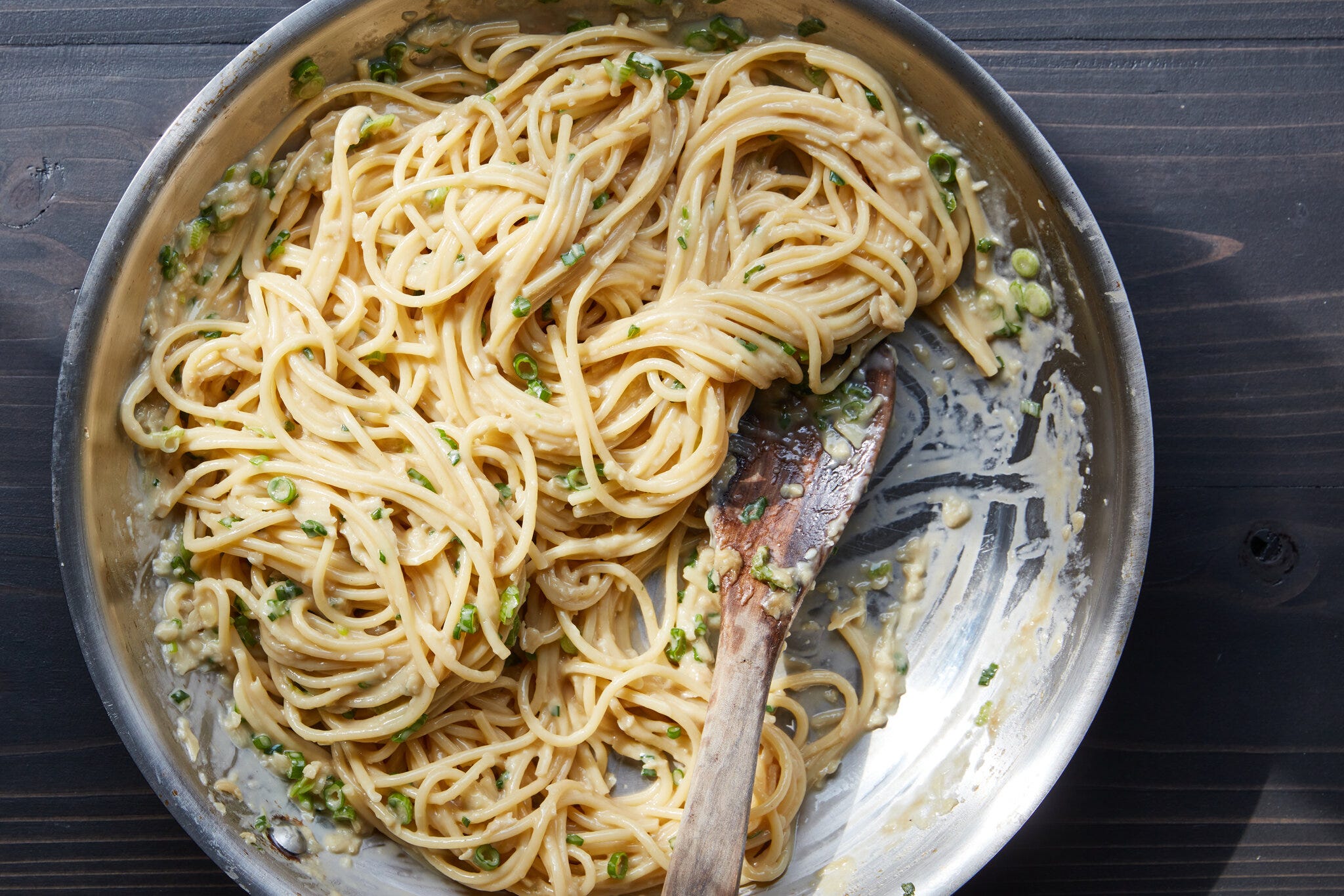
San Francisco-style garlic noodles are a specific culinary invention with a traceable history, distinct from traditional Asian noodle dishes. They were created in the 1970s by Helene An, the matriarch of the An family, at her restaurant Thanh Long in San Francisco’s Outer Sunset district.
The origins of San Francisco’s legendary garlic noodles lie in a happy accident of inventory. When the An family took over the space that would become Thanh Long, it was still functioning as a neighborhood Italian deli, and the kitchen came fully stocked with ingredients that were largely alien to Vietnamese cuisine. Helene An found herself staring down a pantry filled not with rice noodles and herbs, but with boxes of dry spaghetti, blocks of butter, and wheels of Parmesan cheese. Rather than tossing this “leftover” inventory, she embraced it, merging these readily available Italian staples with garlic, the one aromatic bridge between the two worlds, to create a dish born as much from practical necessity as from culinary genius.
This dish is considered one of the earliest examples of Asian-fusion cuisine in the United States. It became a cult phenomenon in the Bay Area. It eventually expanded to the family’s upscale restaurant, Crustacean, and has since been imitated by countless restaurants across California (including spots like Perilla and House of Nanking), becoming a staple of "San Francisco cuisine" alongside sourdough bread and Mission burritos.
Similar examples can be found like this throughout music history. One of my favorites is the legendary producer Burial.
He recorded his albums on audio editors instead of Digital Audio Workstations (DAWs). This is almost like trying to play guitar with one hand tied behind your back.
Modern DAWs all support this thing called quantization, where you can match the beat “to the grid”, meaning that the beat will have literally zero offset to a time signature’s rhythm. Quantization is convenient, but it makes the music dull and boring. Acknowledging this, music producers purposely make their beats slightly off beat so it has a “swing” that adds a hint of “human element” to the music.
The software where he recorded his music had no quantization feature. He just looked at the sound waves of his beats and reiterated until they sounded right. Again, he was cooking with what he had.
But because he recorded his album this way, he was able to produce unexpected beats, disrupting the regular rhythm to create excitement, groove, and a sense of forward motion.
Perfection through imperfection.
Now how could we apply this to our own lives?
Stop looking for the perfect moment to start something. Stop comparing yourself with others. Stop searching for others’ recipes. Stop using tools that everyone uses.
But start with what you have. Whatever that is. You have a shitty phone camera? Film yourself with it. A broken mic and guitar? Record yourself singing through them. Embrace the imperfection and start improvising. Authenticity also means the courage to be not perfect. After all, nobody is perfect. So don’t stress out because of it.
Many are anxious about the coming age of AI and the gurus want to sell you their AI automation courses. But you can’t automate without owning something to automate. As time goes by, selling AI tools will no longer be relevant because those tools also can be easily replicated with AI.
I can’t say for sure, but the only moat left in the long term is yourself. The human in flesh. Bet on it.